
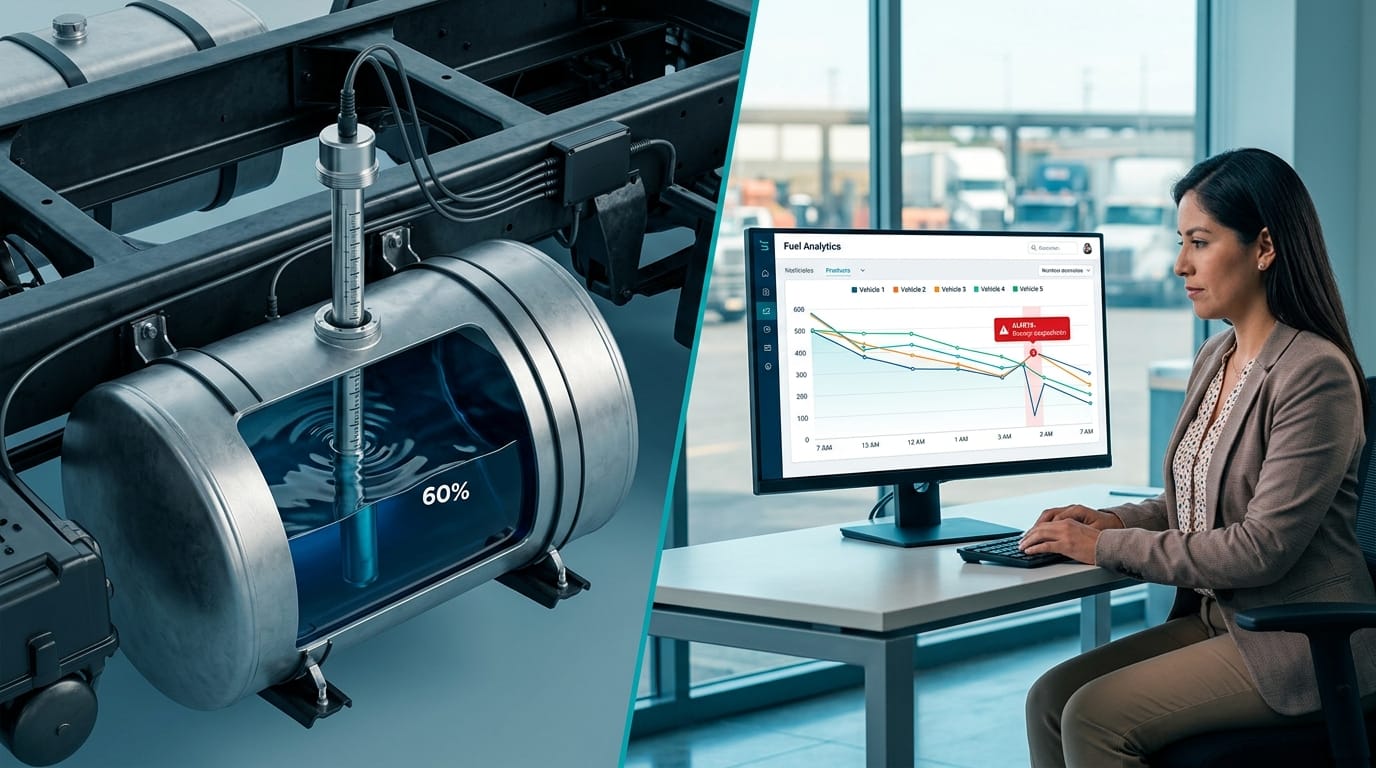
Fleet fuel theft is detected by matching tank level against the GPS trip record: if the level drops with the engine off, the vehicle parked or no mileage to explain it, the system flags a drain or abnormal consumption and sends an alert. That is how fuel monitoring works on the Ituran GPS that Endeavant installs in Peru.
Fuel is one of the biggest costs of running a fleet, and the easiest to lose without data. This guide covers how fuel is stolen, which sensors exist, how each anomaly is detected and how it all ties into fleet GPS tracking.
How is fuel stolen from a fleet?
Most fuel losses in commercial fleets follow a handful of patterns. Knowing them is what lets you set up the right alerts:
- Tank siphoning: fuel is drained while the vehicle is parked, overnight or at an unauthorized stop. It leaves the clearest trace: a sharp level drop with no movement.
- Fill-ups that do not match: the voucher or invoice shows more liters than went into the tank. It shows up when you compare the level rise with the receipt.
- Detours to unauthorized stations: the vehicle leaves its route to fuel where it should not. Geofences around approved stations make it visible.
- Gradual skimming: small, repeated volumes that blend in with normal consumption. They only appear in trend analysis.
- Tampering: disconnecting the sensor or the tracker so nothing is recorded. A serious system alerts on that too.
What types of fuel level sensors are used in fleets?
Fuel monitoring starts with a reliable tank level reading. Commercial fleets mainly use two sensor types, each suited to different cases:
- Capacitive sensors: a submerged probe acts as a capacitor whose capacitance changes with the liquid level. They are the most common in commercial fleets for their balance of accuracy and durability, and they handle vibration and harsh operating conditions well.
- Ultrasonic sensors: use sound waves to measure the distance to the fuel surface, with no moving parts and no contact with the liquid. They suit irregular tanks, although foam and sloshing in a moving tank can affect the reading.
Besides the tank sensor, vehicles that support it deliver engine data over the OBD / CAN bus, the reading Ituran GPS uses for its telematics. For the detail on that system, read our article on Ituran GPS.
How does real-time fuel monitoring work?
A fuel monitoring system combines three pieces: the level reading, the vehicle's GPS tracker and the fleet management platform. The tracker adds position, time, speed and engine status to each reading and sends it to the platform.
On the platform, fuel level shows up as a curve over time. A normal tank follows a predictable pattern: gradual drops while the vehicle runs and sharp rises at each fill-up. Any departure from it, such as a sudden drop with no operational reason, is an anomaly to review.
Context is what makes it useful: if the level falls with the engine off and the vehicle parked somewhere unauthorized, theft is very likely. If it falls while the vehicle is driving normally, it is consumption.
How is a fuel anomaly detected?
Fuel theft detection goes beyond spotting level drops. A good system layers several checks to avoid false alarms without missing real cases:
- Drain detection: flags level drops above a configurable threshold over a short time with the engine off, and matches them with location to see whether the vehicle was at an authorized point.
- Route performance: compares actual against expected consumption for each stretch, allowing for load, gradient and traffic. A large gap opens a review.
- Sensor tampering: spots signs of disconnection or interference: readings frozen for a long time, impossible level jumps or lost signal.
- Long-term trend: compares each vehicle's average consumption week over week. A gradual increase with no operational change can point to a leak, engine wear or low-volume skimming.
What does fuel monitoring deliver?
Fuel monitoring is one of the fleet investments that shows results fastest, because it tackles losses, consumption and admin work at the same time:
- Fewer theft losses: every drain is logged with time, place and vehicle, which discourages the practice and lets you act on each case.
- Lower consumption: consumption patterns show which drivers burn too much, which vehicles have a mechanical issue and which routes are inefficient.
- Less manual reconciliation: automatic reports replace cross-checking invoices, vouchers and fueling tickets by hand.
- Earlier maintenance: a steady rise in consumption often warns of a fault (injectors, filters, tire pressure) before it becomes a breakdown.
The payback depends on fleet size and how much was being lost before you started measuring, so it pays to set a consumption baseline per vehicle during the first weeks.
How does it tie into GPS and fleet management?
Fuel monitoring works best inside the fleet management system. With Ituran GPS, the service includes consumption monitoring, drain detection and abnormal-use alerts, alongside trip playback with distance, duration, fuel and top speed for every journey.
On top of that come geofences at approved stations to validate each fill-up, alerts to your phone or email, automatic reports per vehicle and remote immobilization in case of theft. Our guide to fleet GPS tracking in Peru explains how to choose the full system.